Climate scientists are closely monitoring signs of a potentially historic El Nino event developing across the Pacific Ocean, raising concerns about extreme weather conditions in several parts of the world, including India.
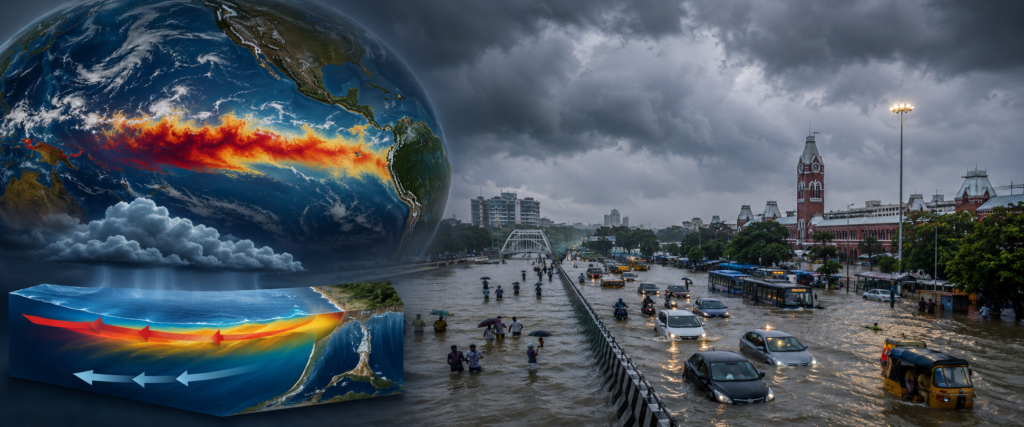
A massive downwelling Kelvin wave — a large subsurface surge of warm water moving across the equatorial Pacific — has now reached the South American coast. Experts say this phenomenon is disrupting the normal cold-water upwelling process and could pave the way for a strong El Nino by mid-2026.
El Nino is a major climate pattern within the El Nino-Southern Oscillation (ENSO) cycle, known for influencing weather systems worldwide. In India, it often weakens the Southwest Monsoon while increasing rainfall activity during the Northeast Monsoon season, especially across Tamil Nadu and coastal Andhra Pradesh.
Global weather agencies, including NOAA and ECMWF, have already indicated strong chances of El Nino conditions emerging later this year. Some forecast models even suggest the possibility of a rare “Super El Nino,” which could significantly intensify climate impacts.
Chennai Among Most Vulnerable Cities
Experts warn that Chennai could face heightened flood risks if the El Nino strengthens. Historically, strong El Nino years have brought excessive moisture into the Bay of Bengal, leading to intense rainfall during the Northeast Monsoon period between October and December.
The devastating Chennai floods of 2015 occurred during a similar strong El Nino phase, causing widespread damage and disruption across the city. Due to Chennai’s flat terrain and low-lying geography, even moderate increases in rainfall can quickly overwhelm drainage systems and water channels.
Climate outlooks from the India Meteorological Department (IMD) and international forecasting agencies also point toward hotter summer temperatures and below-normal Southwest Monsoon rainfall across many parts of India, increasing overall climate pressure.
Calls for Urgent Preparedness
Environmental groups and residents are urging authorities to begin large-scale preparedness measures immediately. Key waterways such as the Cooum River, Adyar River, Otteri Nullah, and major stormwater canals require urgent desilting and restoration work before the monsoon season begins.
Experts also stress the need to remove construction debris and illegal encroachments that obstruct natural water flow, particularly near the Cooum River and surrounding drainage systems.
Citizens and opposition leaders have already started demanding faster action from civic authorities, warning that delays in preparation could lead to another major flooding disaster.
While the Pacific Ocean’s climate patterns cannot be controlled, experts believe timely planning, improved drainage infrastructure, effective early-warning systems, and restored rivers could help Chennai reduce the impact of extreme rainfall events in the coming months.
Originally published on 24×7-news.com.