Travellers commuting in and around Delhi are set to experience smoother highway journeys as the government moves ahead with the implementation of the Multi-Lane Free Flow (MLFF) barrier-less tolling system. The initiative was recently launched by Union Road Transport and Highways Minister Nitin Gadkari at the Mundka–Bakkarwala toll plaza on the Urban Extension Road-II (UER-II).
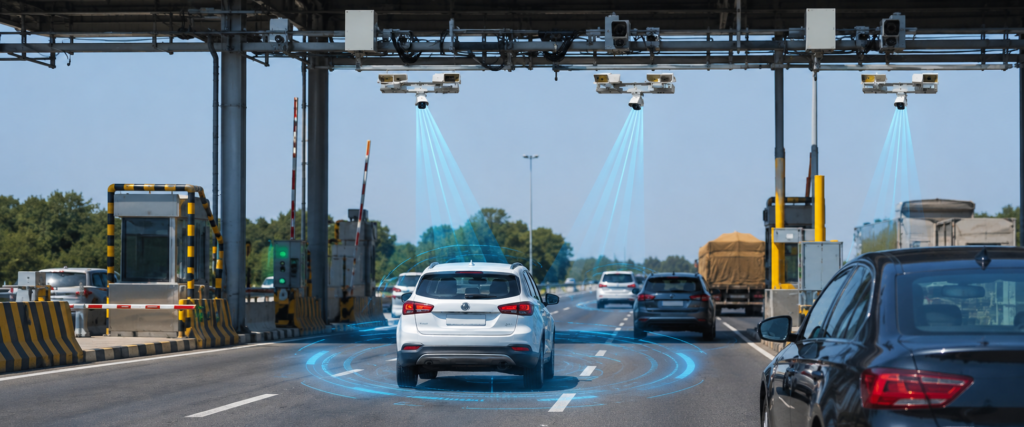
The MLFF system aims to eliminate long waiting times at toll plazas by enabling automatic toll deductions without requiring vehicles to stop. The technology uses FASTags, Automatic Number Plate Recognition (ANPR) cameras, and AI-powered verification systems to process toll payments seamlessly while vehicles continue moving.
Under the new system, overhead cameras capture vehicle registration numbers while FASTag sensors verify vehicle details through the VAHAN database. AI-based systems then match the information and deduct the toll amount automatically.
The government recently implemented the MLFF system at the Chorayasi Toll Plaza on the Surat–Bharuch section of National Highway 48 in Gujarat as part of broader efforts to modernise India’s highway infrastructure. Authorities plan to gradually expand the technology to more highways and urban corridors across the country, with the long-term goal of removing traditional toll plazas by 2026.
The new barrier-free system is expected to significantly reduce congestion at toll points, especially during weekends, holidays, and peak travel hours near major cities. Officials believe the initiative will also improve fuel efficiency and reduce vehicle emissions caused by idling at toll booths.
However, experts have noted that the success of the project will depend on accurate FASTag data, proper vehicle registration details, and efficient systems to identify vehicles with invalid or inactive FASTags. Concerns regarding incorrect toll deductions and technical glitches have also been raised during the trial phase.
Despite these challenges, the government considers the MLFF rollout a major advancement for India’s road infrastructure sector. For daily commuters, tourists, and logistics operators, the new system could lead to faster travel times, lower fuel consumption, and a more convenient highway experience.
Originally published on 24×7-news.com.