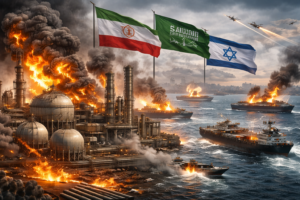
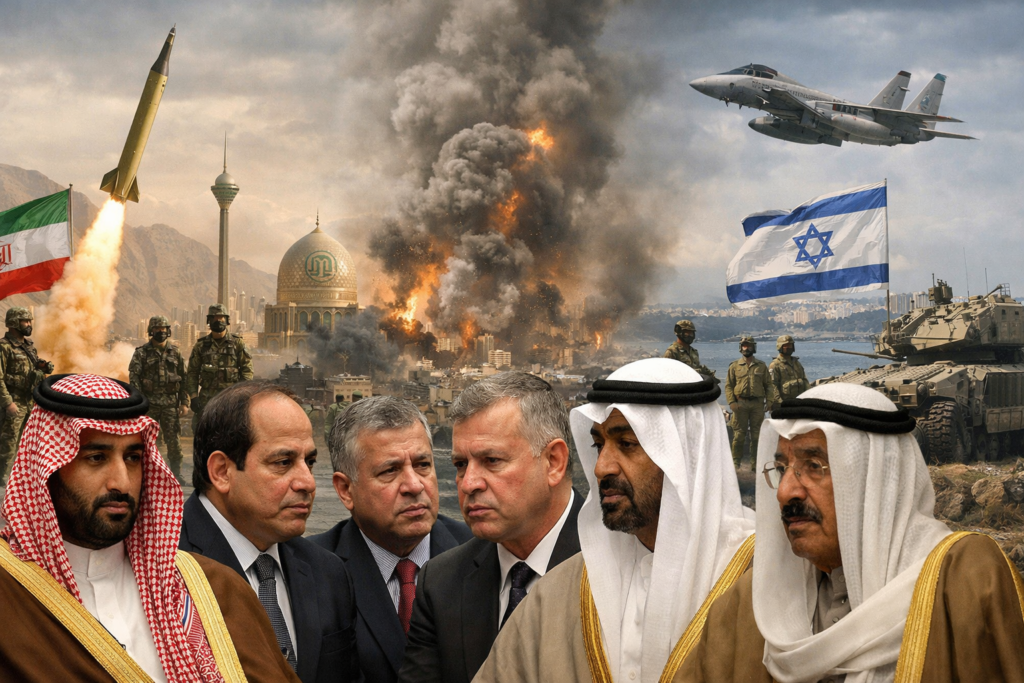
The latest escalation involving the United States, Israel, and Iran has once again highlighted the complex political landscape of the Middle East. While Israel continues to receive firm military, diplomatic, and political backing from Washington, Iran appears relatively isolated in the broader regional framework.
Despite shared religious ties, most Arab and Muslim-majority countries have not openly rallied behind Tehran. The reasons lie not in religious identity alone, but in a web of geopolitical rivalries, security concerns, and economic calculations.
Below are five major factors explaining this dynamic:
1. Sectarian and Historical Divides
Iran is a predominantly Shia nation governed by a clerical establishment rooted in Shia political ideology, while most Arab countries are Sunni-majority. Although sectarian identity is not the sole driver of regional politics, it has historically fueled mistrust.
Additionally, Iran is Persian, not Arab. This ethnic distinction adds another layer of rivalry rooted in centuries of regional competition and historical tensions.
2. Perceptions of Iran as a Regional Challenger
Several Arab governments view Iran as a strategic competitor rather than a unifying Islamic force. Countries such as Saudi Arabia, Jordan, and the United Arab Emirates have frequently accused Tehran of interfering in regional affairs — particularly in Syria, Yemen, Iraq, and Lebanon.
Iran’s support for groups like Hezbollah and Hamas has also raised alarms among neighboring states, who fear proxy conflicts and internal destabilization. For many of these governments, Iran’s regional ambitions are seen as disruptive rather than protective.
3. Strategic Partnerships with the United States and Israel
Geopolitical alliances further complicate the picture. Nations such as Egypt, Jordan, the UAE, and Bahrain maintain diplomatic or security ties with Israel, many of which align closely with US interests.
For these countries, national security and strategic cooperation often outweigh broader ideological or religious solidarity. Supporting Iran could risk their diplomatic and defense relationships with Washington.
4. Economic and Technological Interests
The signing of the Abraham Accords in 2020 marked a significant shift in Middle Eastern diplomacy. The UAE and Bahrain chose to pursue economic collaboration, technological partnerships, and defense coordination with Israel.
These agreements reflect a pragmatic approach: prioritizing economic growth and modernization over confrontation. Iran’s refusal to recognize Israel stands in contrast to this evolving regional strategy.
5. Concerns Over the “Axis of Resistance”
Many Arab governments remain cautious about Iran’s network of proxy groups, often referred to as the “Axis of Resistance.” While leaders across the Arab world publicly support Palestinian rights, this does not automatically translate into endorsing Tehran’s broader regional agenda.
There is widespread concern that deeper involvement with Iran could trigger instability, proxy warfare, or diplomatic fallout.
The Bigger Picture
The lack of unified Arab support for Iran against Israel reflects a fundamental reality of modern Middle Eastern politics: national interests, regime stability, economic growth, and security alliances frequently outweigh religious solidarity.
While public sentiment across parts of the Muslim world may sympathize with Palestine or criticize Israeli actions, governments operate within a framework defined by strategic calculations rather than ideology alone.
In a region shaped by decades of rivalry, shifting alliances, and global power involvement, unity remains far more complex than shared identity might suggest.
Originally published on 24×7-news.com.