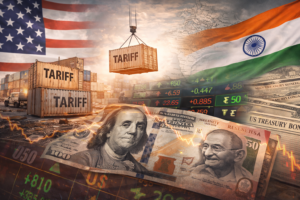

The United States has imposed a steep 126% countervailing duty on solar photovoltaic (PV) module imports from India, a move that could complicate ongoing trade negotiations between New Delhi and Washington.
The US Commerce Department said its preliminary findings indicate that Indian manufacturers benefited from substantial government subsidies, enabling them to sell solar modules in the American market at prices that undercut domestic producers. Similar duties were announced for other Southeast Asian exporters, including Indonesia and Laos, with rates ranging from 81% to 143%.
The decision comes shortly after both countries had agreed on a framework aimed at easing trade tensions, including plans to reduce tariffs on Indian exports. However, recent legal and policy shifts in the US — including court challenges to previous tariff measures and the introduction of new baseline import duties — have added uncertainty to the broader trade landscape.
Impact on the Solar Supply Chain
India, Indonesia, and Laos together accounted for more than half of US solar module imports during the first half of 2025. Industry analysts note that part of this surge reflects Chinese manufacturers relocating production to Southeast Asia to navigate existing US trade barriers.
India emerged as a significant supplier in this shift. Solar exports from India to the US reached nearly $793 million in 2024, marking a sharp increase compared to 2022 levels.
Supporters of the new duty argue it protects domestic manufacturing investments. Representatives from US industry groups have described the move as necessary to counter unfair trade practices and ensure the viability of American solar producers.
Challenges for Indian Manufacturers
For Indian solar manufacturers, the duty presents a substantial setback. With the US market accounting for a major share of exports, companies may now face excess inventory and shrinking overseas demand.
As of early 2026, India’s solar module manufacturing capacity exceeded 160 gigawatts (GW), while domestic demand stood at roughly 40–45 GW. Analysts warn that restricted access to the US market could lead to oversupply within India, putting pressure on pricing and margins.
Market reactions reflected these concerns, with shares of major Indian solar companies coming under pressure following the announcement.
Possible Ripple Effects in the US
While aimed at supporting American manufacturers, the measure could also create challenges for US solar developers. Reduced access to imported modules may increase project costs at a time when the renewable energy sector is already navigating higher financing costs and regulatory uncertainties.
The Commerce Department is expected to issue a final determination on the subsidy findings by 6 July 2026. An anti-dumping investigation is also underway, which could further influence the trajectory of solar trade between the two nations.
Originally published on 24×7-news.com.