Renowned American economist Jeffrey Sachs has warned that the United Arab Emirates could face severe consequences if it becomes directly involved in the ongoing Iran conflict alongside the United States.
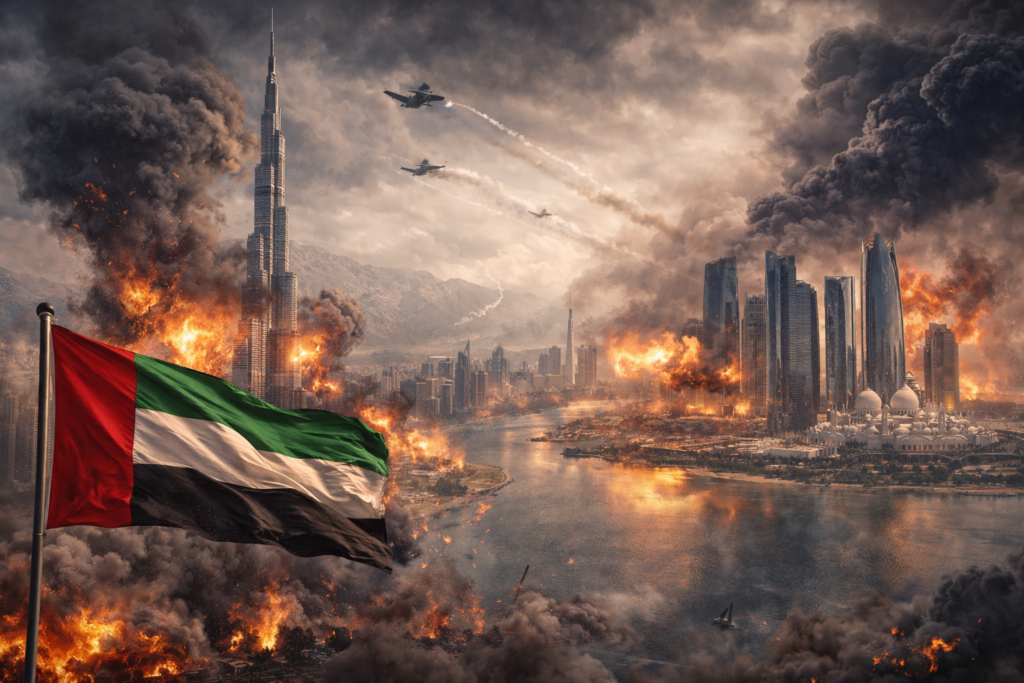
Sachs stated that cities such as Dubai and Abu Dhabi—known globally as major tourism and financial hubs—could become potential targets in the event of escalation.
Tourism Hubs Not Built for War
According to Sachs, these cities are not designed as fortified military zones but as global destinations attracting tourists and investors. Entering a conflict, he argued, would undermine their core identity and expose them to unnecessary risks.
He described the situation as a strategic misstep, suggesting that involvement in a war zone contradicts the UAE’s economic model built on stability, tourism, and international investment.
UAE’s Strategic Role in Hormuz Tensions
The warning comes amid reports that the UAE has expressed willingness to join a multinational maritime coalition aimed at securing shipping routes through the Strait of Hormuz—a key global oil transit corridor.
This move is seen as part of broader efforts led by the United States to ensure safe passage for commercial vessels amid rising tensions in the region.
Criticism of US Alignment
Sachs also criticised Gulf nations for aligning closely with US policies, including agreements like the Abraham Accords, which he described as a strategic miscalculation.
He argued that relying heavily on external powers for security may not be sustainable and urged regional players to prioritise their own defence strategies.
Call for Strategic Reassessment
Emphasising the growing risks, Sachs advised the UAE to reconsider its approach and focus on safeguarding its own interests rather than deepening involvement in the conflict.
He cautioned that continued escalation could lead to unintended consequences, especially if regional tensions intensify further.
Iran’s Warning to Regional Allies
Iran has repeatedly cautioned countries in West Asia against allowing foreign powers to use their territory for military operations. It has warned that any such cooperation could result in retaliatory actions.
Conclusion
As geopolitical tensions continue to rise, Sachs’ remarks highlight the delicate balance Gulf nations must maintain between strategic alliances and national security, particularly in a conflict with potentially far-reaching consequences.
Originally published on 24×7-news.com.