
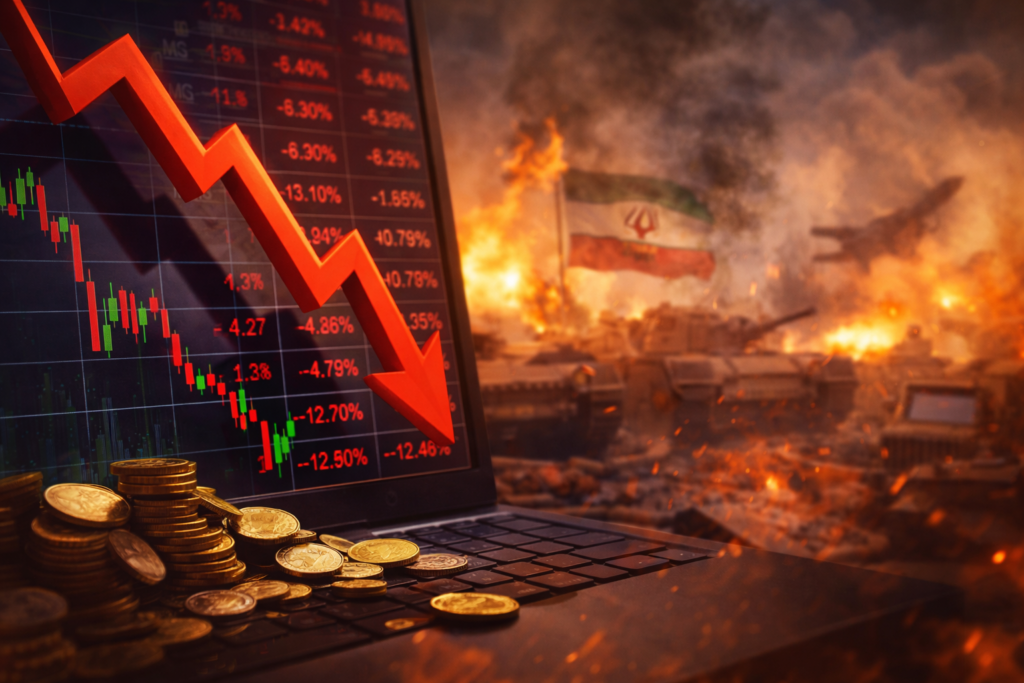
The ongoing Middle East conflict has sent shockwaves through Indian equity markets, triggering a widespread sell-off across sectors. Data from the BSE 500 index reveals that nearly 83% of stocks have declined since hostilities escalated on February 28.
Out of 500 companies, around 413 stocks are trading in the red, with over 100 stocks witnessing double-digit losses of up to 35%. The sharp correction reflects growing investor anxiety amid global uncertainty, rising energy prices, and tightening financial conditions.
Markets Under Pressure
The BSE 500 index has dropped by nearly 3,000 points, marking an approximate 8% decline in value. The fall highlights a strong “risk-off” sentiment among investors, who are increasingly cautious about macroeconomic headwinds.
The market had already been dealing with global challenges, including tariff uncertainties and disruptions caused by rapid advancements in artificial intelligence. The ongoing war has further intensified these pressures, adding volatility to global markets.
Oil Prices and Interest Rates Add to Concerns
A major factor behind the sell-off is the surge in crude oil prices, which briefly touched around $116 per barrel before easing slightly. Higher oil prices are particularly concerning for India, as they increase import costs and fuel inflation.
At the same time, the US Federal Reserve has maintained interest rates in the range of 3.5%–3.75%, signalling a cautious stance with limited rate cuts expected in 2026. This has added to global liquidity concerns and reduced investor appetite for riskier assets like equities.
Rupee Weakness Deepens Impact
The Indian rupee has also come under pressure, falling to a record low of 92.94 against the US dollar. Currency depreciation has further compounded the problem by increasing the cost of imports and adding to inflationary pressures.
Experts expect the rupee to remain weak in the near term, especially if crude oil prices continue to rise.
Sectoral Impact and Key Losers
Several sectors have been directly affected by the ongoing crisis. Oil marketing companies such as BPCL, IOC, and HPCL have seen sharp declines due to concerns over shrinking margins.
Other companies linked to global trade and supply chains, including Redington and Aegis Vopak Terminals, have also been hit. Realty stocks have weakened due to their sensitivity to interest rates and rising input costs.
Major listed companies such as Larsen & Toubro, Maruti Suzuki, State Bank of India, UltraTech Cement, and Bajaj Finance have recorded double-digit losses, reflecting the broad-based nature of the decline.
IDBI Bank emerged as one of the worst performers, falling sharply amid uncertainty surrounding its strategic stake sale.
Limited Gainers Amid Downtrend
Despite the widespread decline, a small segment of the market has shown resilience. Around 18% of BSE 500 stocks have delivered positive returns.
Companies in the energy, defence, and power sectors—such as Adani Power, Mazagon Dock Shipbuilders, and Waaree Energies—have gained, benefiting from the geopolitical situation and increased demand in their respective sectors.
Market Outlook Remains Uncertain
A significant number of stocks are hovering near neutral levels, indicating that market direction could shift quickly based on global developments.
With geopolitical tensions continuing, oil price volatility, and macroeconomic uncertainties, investors are expected to remain cautious in the near term. The evolving situation in the Middle East will likely play a crucial role in determining the next phase of market movement.
Originally published on 24×7-news.com.