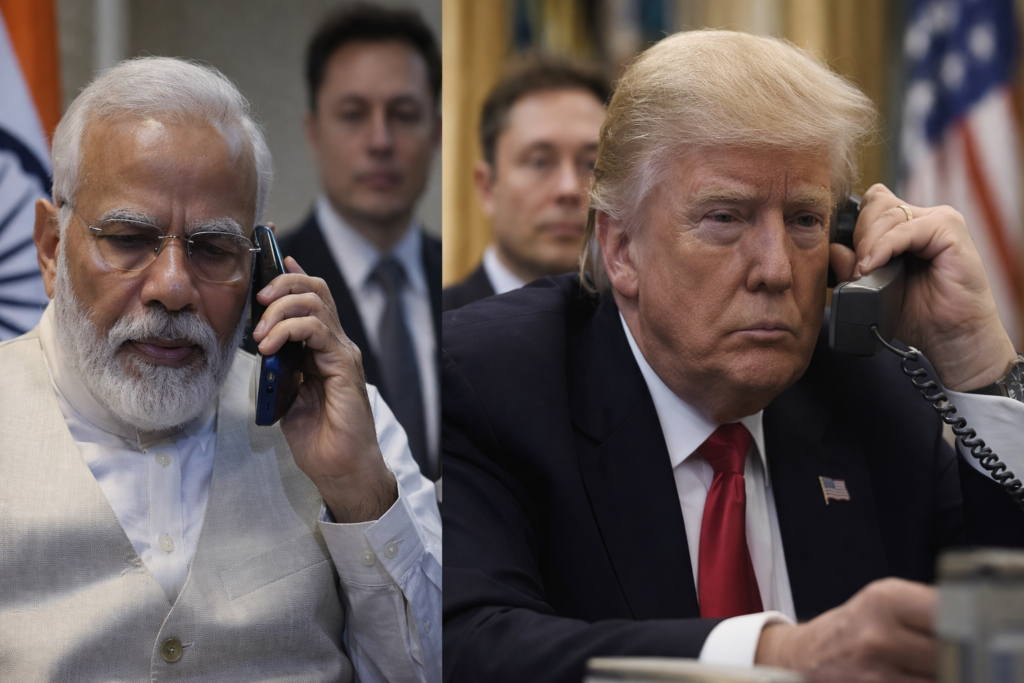
India has clarified that Prime Minister Narendra Modi spoke exclusively with US President Donald Trump during their phone conversation on March 24, dismissing reports suggesting involvement by billionaire entrepreneur Elon Musk.
The clarification came from the Ministry of External Affairs (MEA) following a report by The New York Times, which claimed Musk had participated in the high-level discussion. Responding to the report, MEA spokesperson Randhir Jaiswal stated that the conversation was strictly between the two leaders.
While firmly ruling out Musk’s participation in the call, the government did not explicitly comment on whether the SpaceX CEO may have been physically present during the conversation. The White House has also not issued any official clarification on the matter.
Context of the Call
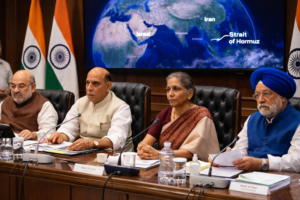
The March 24 call marked the first direct interaction between Modi and Trump since the escalation of the US-Israel-Iran conflict earlier this year. The discussion focused primarily on developments in West Asia, a region currently witnessing heightened tensions affecting global markets.
Reports have described Musk’s alleged involvement as an unusual scenario, noting that the presence of a private individual during a conversation between two heads of state would be unprecedented, particularly during a period of geopolitical crisis.
Rising Global Concerns
The ongoing conflict in West Asia has significantly impacted global energy and fertiliser markets. Crude oil prices have surged sharply, with Brent crude nearing $112 per barrel, reflecting supply disruptions caused by the effective closure of the Strait of Hormuz.
Prime Minister Modi has reiterated India’s stance, calling for de-escalation and a peaceful resolution to the conflict. Meanwhile, President Trump has indicated that diplomatic efforts are underway to resolve tensions, although Iran has denied any direct negotiations with the United States.
Broader Diplomatic Developments
Several countries have been involved in indirect communication between the US and Iran. Pakistan, for instance, has acknowledged relaying messages between the two nations, highlighting the complex diplomatic channels at play.
The conflict has also disrupted energy supplies in the Gulf region. Key production facilities in Qatar, a major supplier of liquefied natural gas (LNG) to India, have been affected, tightening global supply chains further.
Impact on India
India, which relies heavily on imports for its energy needs, remains vulnerable to prolonged instability in West Asia. The government is closely monitoring developments while working to manage potential economic impacts.
Despite engaging with both US and Iranian leadership, India has not indicated any intention to act as a mediator in the conflict. Meanwhile, discussions in Washington about deploying additional forces to the region add further uncertainty to the evolving situation.
Originally published on 24×7-news.com.