
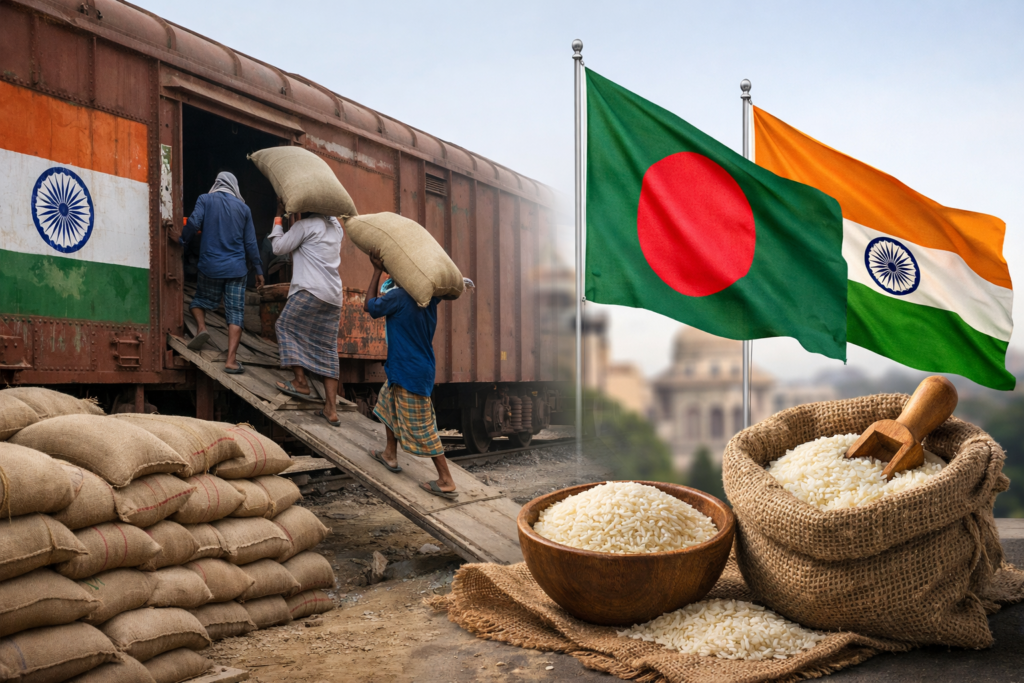
In a move aimed at easing recent diplomatic frictions, Bangladesh’s interim government has signalled a renewed effort to stabilise ties with India, underlining that economic priorities will take precedence over political differences.
Finance Adviser Salehuddin Ahmed said on Tuesday that Chief Adviser Mohammad Yunus has initiated steps to improve engagement with New Delhi. Speaking after a meeting of the government’s Procurement Advisory Council, Ahmed said the administration is actively working to strengthen diplomatic communication through intermediaries, even though Yunus has not yet spoken directly with Indian officials.
“Our focus is on improving relations with India through constructive engagement,” Ahmed said, adding that the government is in contact with those involved in managing bilateral dialogue.
A key signal of this approach came the same day when Bangladesh approved the import of 50,000 tonnes of rice from India. Ahmed stressed that the decision was driven entirely by economic reasoning, not politics.
“Our trade policy is not influenced by political considerations,” he said. “If importing rice from India is cheaper than buying from Vietnam or other countries, it makes economic sense to source it from India.”
According to the adviser, importing rice from Vietnam would cost Bangladesh an additional 10 Bangladeshi taka per kilogram, making Indian supplies the more affordable option. He described the decision as a practical step that also helps maintain stable bilateral relations.
The comments come amid heightened diplomatic strain between Bangladesh and India, with both sides recently summoning each other’s diplomats and protests reported near diplomatic missions in Dhaka and New Delhi.
Despite these developments, Ahmed played down fears of a crisis, saying the situation had not reached a breaking point and that dialogue remained possible.
He also cautioned against external provocations and unregulated statements that could inflame tensions. “We do not want bitterness between Bangladesh and India,” he said, adding that actions by individuals or outside forces do not reflect Bangladesh’s national position and only complicate diplomatic efforts.
Originally published on 24×7-news.com.