Bangladesh is witnessing heightened political and social unrest following the return of senior opposition leader Tarique Rahman to Dhaka after 17 years in exile, even as the country struggles with violence, lynchings, and growing international scrutiny ahead of general elections.
Rahman, the son of former prime minister Khaleda Zia, returned on Thursday, boosting morale within the Bangladesh Nationalist Party (BNP). His arrival comes at a volatile moment, with Bangladesh facing allegations of lawlessness, political instability, and attacks on minorities.
Political Crisis and Interim Government Under Pressure
The crisis intensified following the ouster of former prime minister Sheikh Hasina, after which an interim caretaker government led by Muhammad Yunus assumed power. The administration, which initially rose to prominence on the back of large-scale student protests, is now struggling to control escalating violence.
Reports of multiple lynchings, the assassination of a prominent student leader, violent street protests, and attacks on media houses and cultural organisations have raised concerns about the country’s internal security. The interim government’s decision to impose a blanket ban on Hasina’s Awami League has also drawn criticism, with observers warning that it could undermine the fairness of upcoming elections.
The United Nations has expressed concern over the political developments and urged Bangladeshi authorities to safeguard democratic processes and ensure voters’ rights are protected.
Lynching of Hindus Sparks Protests in India
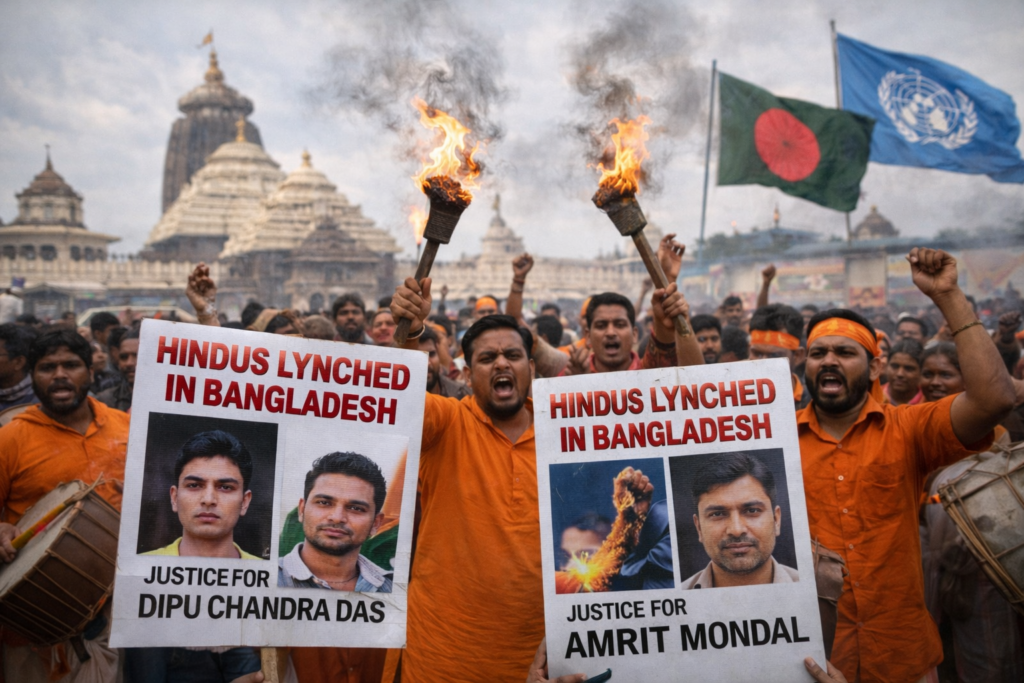
Tensions further escalated after the lynching of two men from the Hindu minority community in Bangladesh. Dipu Chandra Das was killed in Mymensingh, while Amrit Mondal was beaten to death in Rajbari district within days of each other.
These incidents triggered protests across India, including demonstrations outside the Puri Jagannath Temple. Hindu organisations such as Bajrang Dal and Vishva Hindu Parishad have staged protests outside Bangladeshi diplomatic missions, demanding accountability and protection for minorities.
Political parties including the Bharatiya Janata Party and the Indian National Congress have also joined the protests, urging the Indian government to take a firm diplomatic stand.
Growing Regional and International Concerns
Analysts warn that continued instability in Bangladesh could have broader regional implications, particularly if violence against minorities and political dissent persists. With elections approaching and international attention intensifying, the interim government faces mounting pressure to restore law and order while ensuring inclusive and credible democratic processes.
Originally published on 24×7-news.com.