
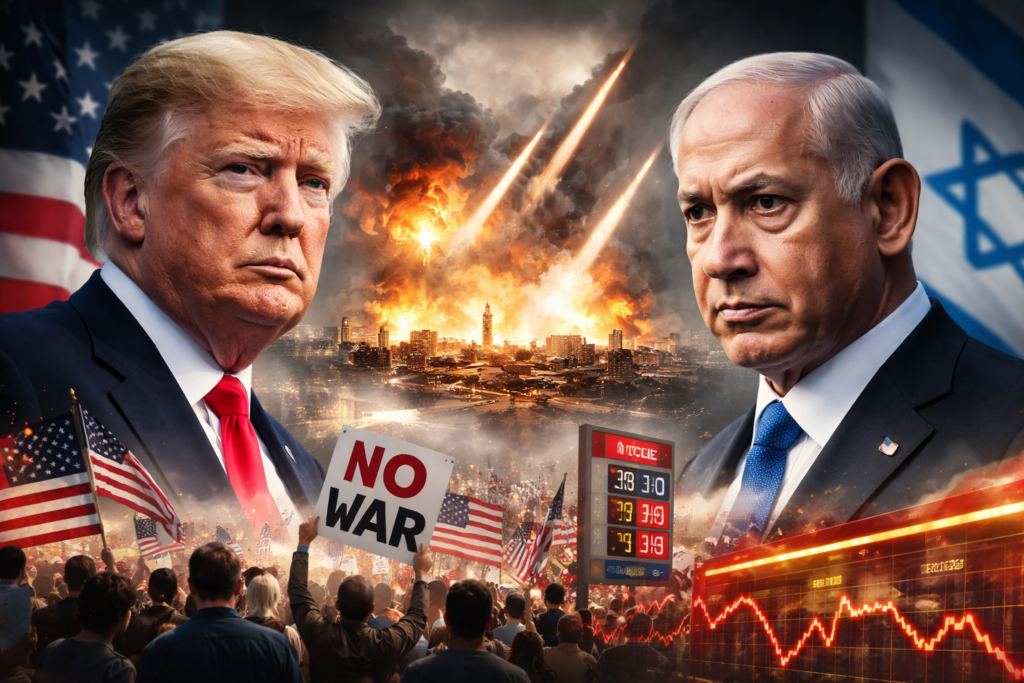
Former diplomat KP Fabian has indicated that the ongoing conflict in the Middle East may soon reach a turning point, with the next steps largely dependent on decisions by Donald Trump and Benjamin Netanyahu.
Speaking on the evolving situation, Fabian described the war as a prolonged cycle of escalation with no clear resolution in sight. He noted that while Iran continues to respond militarily, any meaningful pause in hostilities would require the United States and Israel to first halt their operations.
Conflicting Signals from the US
Fabian highlighted inconsistencies in messaging from Washington, pointing out that claims of achieving key military objectives contrast with rising economic and political pressures domestically.
He questioned the narrative of success, suggesting that references to eliminating leadership figures reflect a strategy of “decapitation” rather than a clear path to stability. These developments come amid increasing scrutiny over the war’s broader impact on the US economy.
Rising Domestic Pressure in the US
According to Fabian, internal pressure on Trump is steadily increasing. Protests across the country, including large-scale demonstrations under the “No Kings” banner, reflect growing public dissatisfaction with the conflict and its economic consequences.
Fuel prices have already risen significantly and could climb further if disruptions in key shipping routes, such as the Red Sea, intensify. Additionally, declining stock markets are adding to concerns, amplifying the political cost of continued engagement.
Limited Scope for Immediate Diplomacy
Fabian believes that direct negotiations between the US and Iran are unlikely in the current scenario. He pointed to the wide gap in expectations between the two sides, along with Iran’s reluctance to engage directly with Washington.
Any diplomatic breakthrough, he suggested, would likely require mediation through a third party, a method Iran has historically preferred.
Possible ‘Declare Victory’ Exit
One potential outcome, according to Fabian, is that Trump may choose to declare victory and gradually step back from active involvement in the conflict.
Such a move could allow him to frame the situation as a strategic success while reducing further political and economic fallout at home. However, Fabian cautioned that this approach would also depend on Israel’s stance, noting that Netanyahu may not fully support such a shift but could be compelled by circumstances.
Iran’s Conditions for De-escalation
Fabian added that Iran is likely to push for broader ceasefire terms, including a complete halt to US and Israeli military actions, as well as cessation of operations in neighbouring regions like Lebanon.
He also warned of wider global economic repercussions, including disruptions to critical supplies such as helium, where Qatar plays a key role.
Conclusion
With domestic pressure intensifying in the United States, Fabian suggested that political considerations may ultimately shape the course of the conflict more than battlefield developments. A strategic exit, framed as a victory, could emerge as the most viable path forward in the coming weeks.
Originally published on 24×7-news.com.