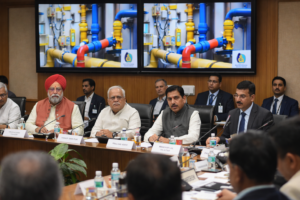
India has achieved a remarkable transformation in its renewable energy sector, expanding its solar manufacturing capacity from just 3 GW a decade ago to an impressive 172 GW today. The milestone was highlighted by Union Minister Pralhad Joshi in Parliament.
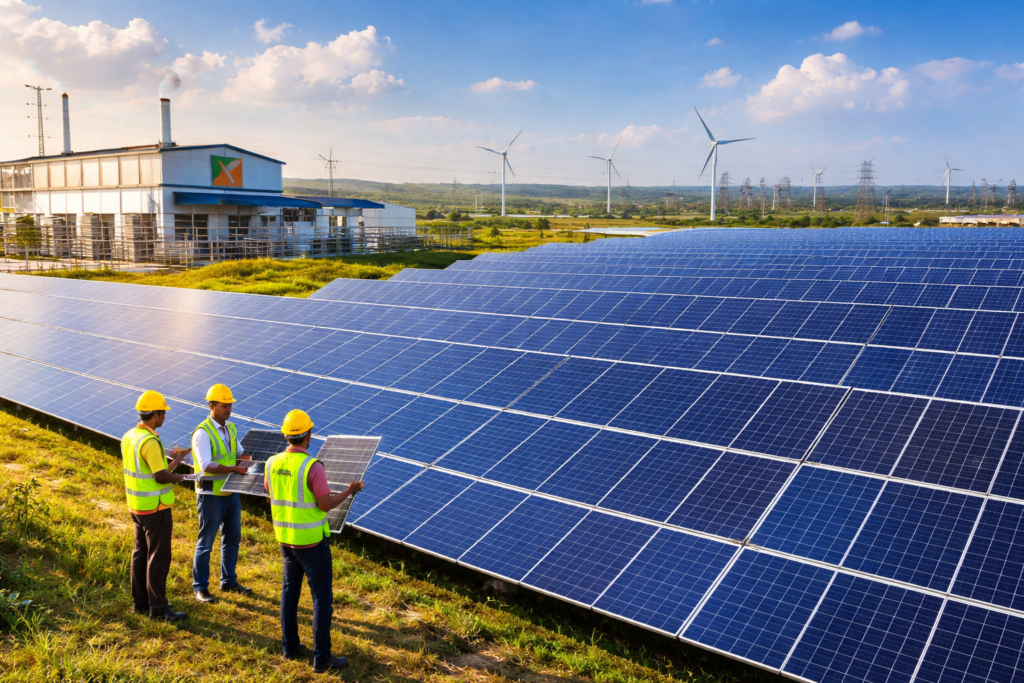
A solar module, commonly seen on rooftops and large solar farms, is the unit that converts sunlight into electricity. The sharp increase in domestic manufacturing reflects India’s growing self-reliance in clean energy production.
Rising Solar Output and Infrastructure
India now not only manufactures solar equipment at scale but also generates substantial electricity from it. The country’s installed solar power capacity has reached around 144 GW, powering homes, industries, and urban infrastructure.
Domestic solar cell manufacturing currently stands at 27 GW, forming the backbone of module production. Cells are the core components inside panels that convert sunlight into electrical energy.
Rooftop Solar Revolution Gains Momentum
The expansion is no longer limited to large solar parks. Through the PM Surya Ghar Muft Bijli Yojana, solar power is increasingly reaching households.
Under this initiative, nearly 10,000 rooftop solar systems are being installed daily. So far, around 40 lakh homes have adopted rooftop solar, marking a major shift toward decentralised energy generation. States like Maharashtra are leading the adoption drive.
PLI Scheme Strengthens Domestic Manufacturing
A major driver behind this growth is the government’s Production Linked Incentive (PLI) scheme. The program offers financial incentives to manufacturers based on output, encouraging domestic production.
It has enabled India to build a complete solar supply chain—from raw silicon processing (ingots and wafers) to finished panels—reducing dependence on imports.
Wind Energy Growth Alongside Solar
India’s renewable push is not limited to solar alone. Wind energy capacity has also expanded significantly, reaching approximately 55 GW, contributing to the country’s clean energy mix.
Future Targets and Policy Push
Looking ahead, the government has set ambitious goals. From June 1, 2026, all solar projects in India will be required to use domestically manufactured solar cells.
The Ministry of New and Renewable Energy aims to scale domestic solar cell manufacturing capacity to 42 GW by then. This move is expected to safeguard India against global supply disruptions and price volatility.
Conclusion
India’s rapid expansion in solar manufacturing and energy generation highlights its commitment to renewable energy and self-reliance. With strong policy support and continued investment, the country is well-positioned to achieve its future clean energy targets.
Originally published on 24×7-news.com.