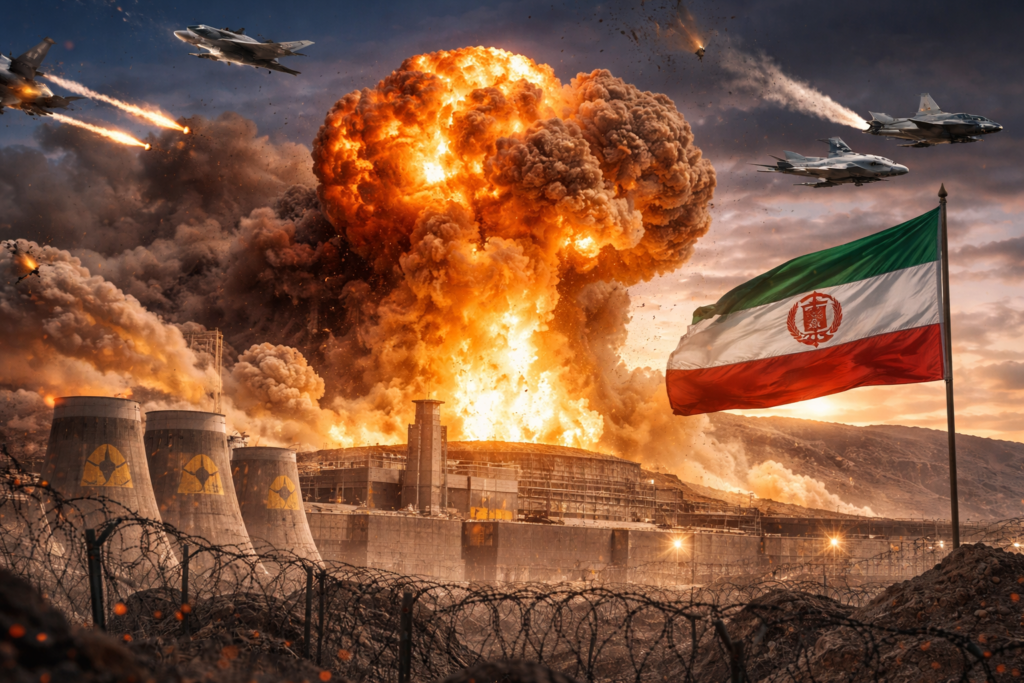
Iran’s key nuclear facility at Natanz has once again come under attack, marking a significant escalation in the ongoing conflict involving the United States, Israel, and Iran. Iranian authorities confirmed that the uranium-enrichment complex was targeted early Saturday, describing the incident as part of continued hostilities in the region.
Officials stated that despite the strike, there has been no leakage of radioactive material, and nearby populations remain safe. The update, reported by local media, aims to reassure both domestic and international observers amid rising concerns over nuclear safety.
⚠️ Escalating Conflict in the Gulf
The strike comes as the broader confrontation in the Gulf region enters its fourth week. The conflict, which began with coordinated US-Israel operations in late February, has since expanded to include attacks on key energy and strategic infrastructure.
Recent developments have seen a sharp increase in retaliatory actions. Iran intensified its response following Israeli strikes on the South Pars gas field—one of the world’s most critical energy hubs. In turn, Tehran targeted Qatar’s Ras Laffan facility, the largest liquefied natural gas (LNG) complex globally, further disrupting global energy supply chains.
The Natanz strike is the latest in a series of attacks on Iran’s nuclear infrastructure. Previous operations have targeted other major facilities, including Fordow and Isfahan, underscoring the strategic importance of these sites.
🔬 Why Natanz Is Critical
The Natanz facility holds a central place in Iran’s nuclear programme. Built deep underground and fortified against aerial attacks, it houses thousands of centrifuges used for uranium enrichment.
While uranium enrichment can serve civilian purposes such as power generation, it also has the potential to be advanced to weapons-grade levels. This dual-use nature has made Natanz a focal point of international scrutiny and diplomatic tension for years.
🌍 Monitoring Disruptions Raise Concerns
Before the current conflict, Iran’s nuclear programme was among the most closely monitored globally, with frequent inspections conducted by international watchdogs. However, recent strikes on multiple facilities have disrupted this oversight, raising concerns about transparency and future monitoring.
The escalation has also revived discussions around long-standing US contingency plans related to Iran’s nuclear infrastructure, including strategies for accessing and securing underground facilities.
🔥 Rising Stakes for Global Stability
The latest attack signals a continued expansion of the conflict, with both nuclear and energy assets increasingly becoming targets. While immediate safety concerns such as radiation leaks have been ruled out, the broader implications for regional stability and global energy markets remain significant.
As tensions intensify, the risk of further escalation continues to grow, keeping the international community on high alert.
Originally published on 24×7-news.com.