
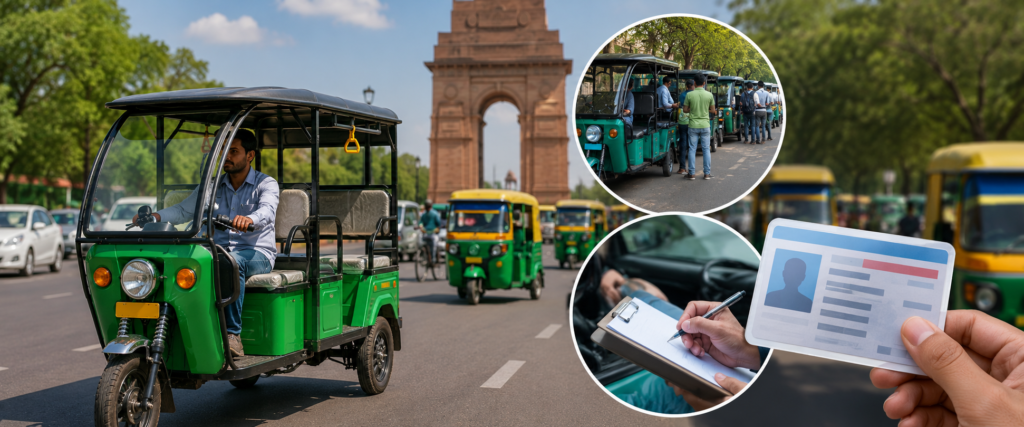
The Delhi Transport Department is set to restart the online registration process for e-rickshaws in the national capital after a suspension of nearly five months. Along with the resumption, the government has introduced a fresh set of rules aimed at regulating the rapidly expanding e-rickshaw sector in the city.
Under the revised guidelines, only one e-rickshaw can now be registered against a single driving licence. Officials stated that the earlier system allowed multiple vehicles to be registered under one licence holder, which raised concerns regarding concentrated ownership and unauthorised operations.
Mandatory Training Introduced
The department has also made a two-week training programme compulsory for all applicants seeking e-rickshaw registration. Authorities clarified that registration approvals will only be granted after submission of a valid training certificate.
A dedicated online portal for registrations is expected to go live soon on the official website of the Transport Department.
Why The Registration Was Suspended
Officials said the registration process had been paused in November last year while the government worked on a revised framework to better manage the increasing number of e-rickshaws being used for last-mile connectivity across Delhi.
The government believes the new system will help improve accountability and reduce the number of unauthorised vehicles operating on city roads.
One Vehicle Per Licence Holder
According to transport officials, linking one e-rickshaw to one licence holder is intended to support individual drivers and prevent large-scale ownership by a few operators. The move is also expected to strengthen self-employment opportunities in the sector.
Earlier this year, the department had withdrawn a previous circular that permitted companies to register multiple electric carts and e-rickshaws under a single entity. Officials said the rollback was aimed at ensuring fair ownership practices and better regulation of the sector.
Broader E-Rickshaw Policy In Progress
The Delhi government is also working on a comprehensive e-rickshaw policy to streamline operations, improve safety standards and strengthen enforcement mechanisms in the coming months.
Authorities say the updated rules are designed to balance growing demand for affordable last-mile transport with better compliance and operational transparency across the city.
Originally published on 24×7-news.com.