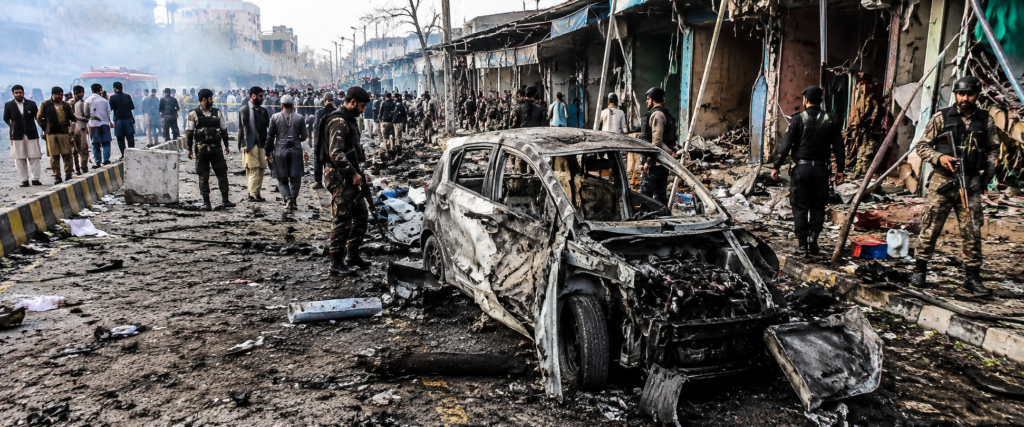
A powerful explosion ripped through a crowded market area in northwestern Pakistan on Monday, killing at least seven people and injuring several others.
The incident occurred in the Lakki Marwat district of Khyber Pakhtunkhwa when a vehicle loaded with explosives detonated near a railway crossing in a busy marketplace, according to local officials and media reports.
Among those killed were five civilians and two police personnel. The blast triggered panic across the market as thick smoke filled the area and nearby shops and structures suffered damage from the impact.
Rescue teams, police officials and emergency responders rushed to the scene shortly after the explosion. Injured victims were shifted to nearby hospitals while security forces sealed off the area to begin investigation and search operations.
Authorities have launched a probe to determine the nature of the attack and identify those responsible for planting the explosives. As of now, no organisation has claimed responsibility for the blast.
The explosion comes amid continued security concerns in regions bordering Afghanistan, where tensions and cross-border violence have increased in recent months. Officials are also examining whether the incident has any connection to ongoing regional instability and militant activity.
Security has been tightened across nearby districts as investigators continue forensic examination of the blast site.
Originally published on 24×7-news.com.