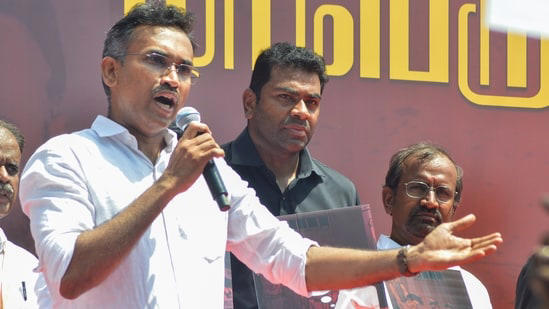
KG Arunraj has officially taken oath as a minister in the newly formed Tamil Nadu government led by Chief Minister Joseph Vijay following the landmark electoral victory of the Tamilaga Vettri Kazhagam (TVK).
Arunraj, a doctor-turned-civil servant, previously served in the Income Tax Department across several states including Tamil Nadu, Bihar and Maharashtra before opting for voluntary retirement and entering politics.
From Civil Service to Politics
After leaving government service, Arunraj joined TVK and quickly emerged as one of the prominent faces in the party’s organisational structure. In June last year, Vijay appointed him as the party’s General Secretary for Propaganda and Policy, assigning him a major role in shaping the party’s political messaging and campaign strategy.
Arunraj later contested from the Tiruchengodu constituency and secured a convincing victory with a margin of 28,712 votes, strengthening his position within the party leadership.
Vijay Sworn In as Tamil Nadu Chief Minister
Actor-turned-politician Vijay, popularly known as “Thalapathy,” was sworn in as the 13th Chief Minister of Tamil Nadu after TVK’s remarkable performance in its debut Assembly election.
The oath-taking ceremony took place at Jawaharlal Nehru Stadium and was administered by Governor RN Ravi. Several political leaders and public figures attended the event, including Rahul Gandhi and actress Trisha Krishnan.
Along with Arunraj, several other TVK leaders also took oath as ministers in the new cabinet.
TVK Ends Decades of Dravidian Dominance
The 2026 Tamil Nadu Assembly elections marked a dramatic political shift in the state. In its very first electoral contest, TVK won 108 out of 234 seats, emerging as the single-largest party and disrupting the long-standing dominance of the major Dravidian parties.
However, the party initially fell short of the majority mark and later secured support from alliance partners including Congress, CPI(M), CPI, VCK and IUML to form the government.
Political Drama Before Government Formation
The formation of the government witnessed intense political developments, with Vijay making multiple visits to the Governor’s residence to stake claim for forming the administration.
Following confirmation of support from alliance partners, the Governor formally invited Vijay to form the government, paving the way for the new cabinet to take charge in Tamil Nadu.
Originally published on 24×7-news.com.